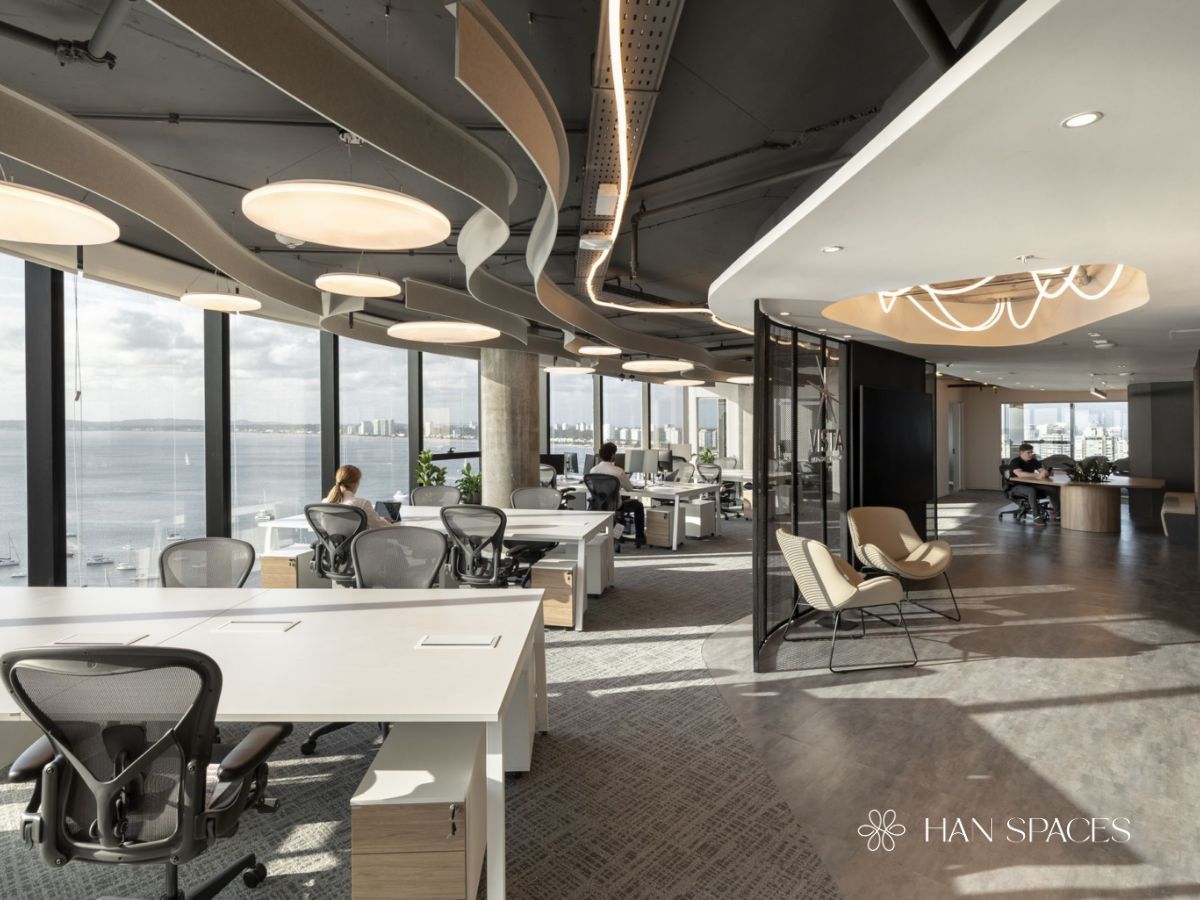
AI in Office Design: 7 Remarkable Ways Technology Is Shaping Sustainable Workplaces
Explore how AI in office design is helping designers optimize spaces, improve energy efficiency, evaluate materials and make more informed decisions for sustainable workplaces.
Introduction: Rethinking the Way We Design Workplaces
Sustainable office design is no longer limited to selecting environmentally friendly materials or incorporating energy-efficient systems. It requires a more comprehensive approach to how workplaces are planned, designed and used throughout their lifecycle.
AI in office design is introducing new possibilities for making these decisions more intelligently. From exploring spatial configurations and evaluating material alternatives to analyzing environmental performance, artificial intelligence (AI) can help designers consider multiple factors before translating concepts into physical spaces.
Every design decision, from spatial layouts and lighting configurations to material specifications and furniture selection, can influence a workplace’s environmental footprint. Making these decisions requires balancing functionality, aesthetics, cost, energy performance and occupant comfort.
Rather than replacing creative expertise, AI offers an additional layer of intelligence to the design process, helping connect design decisions with their potential environmental and operational impact.
1. Smarter Design Through Data and AI
Traditional office design involves balancing numerous requirements, from spatial efficiency and employee needs to technical specifications and project budgets. Exploring multiple design alternatives while maintaining these considerations can be challenging.
AI-assisted design tools can help streamline this process by supporting concept development, spatial visualization and the analysis of different design configurations.
In particular, AI in office design can support a more data-informed approach when integrated with computational design, Building Information Modeling (BIM) and building performance analysis. These technologies can help designers explore considerations such as daylight availability, spatial efficiency and environmental performance.
For example, designers can evaluate alternative office layouts to understand how furniture arrangements, circulation routes and functional zones affect the use of available space.
These capabilities create opportunities to move beyond purely intuitive decision-making. By combining creative expertise with data-supported exploration, designers can develop solutions that better balance visual quality, functionality and sustainability.
2. Optimizing Energy and Environmental Performance
Energy consumption is one of the most important considerations in sustainable building design and operations. Lighting, heating, ventilation and air conditioning (HVAC) systems all contribute to a workplace’s operational energy demand.
AI in office design introduces new opportunities for energy optimization by using AI-powered technologies to analyze occupancy patterns, environmental conditions and historical consumption data. These insights can help identify inefficiencies and inform decisions about how building systems should operate.
Several applications of AI in office design are particularly relevant:
Intelligent Energy Management
AI-enabled building management systems can analyze occupancy, weather conditions and energy usage to support more efficient HVAC and lighting schedules, reducing unnecessary consumption.
Daylight and Lighting Optimization
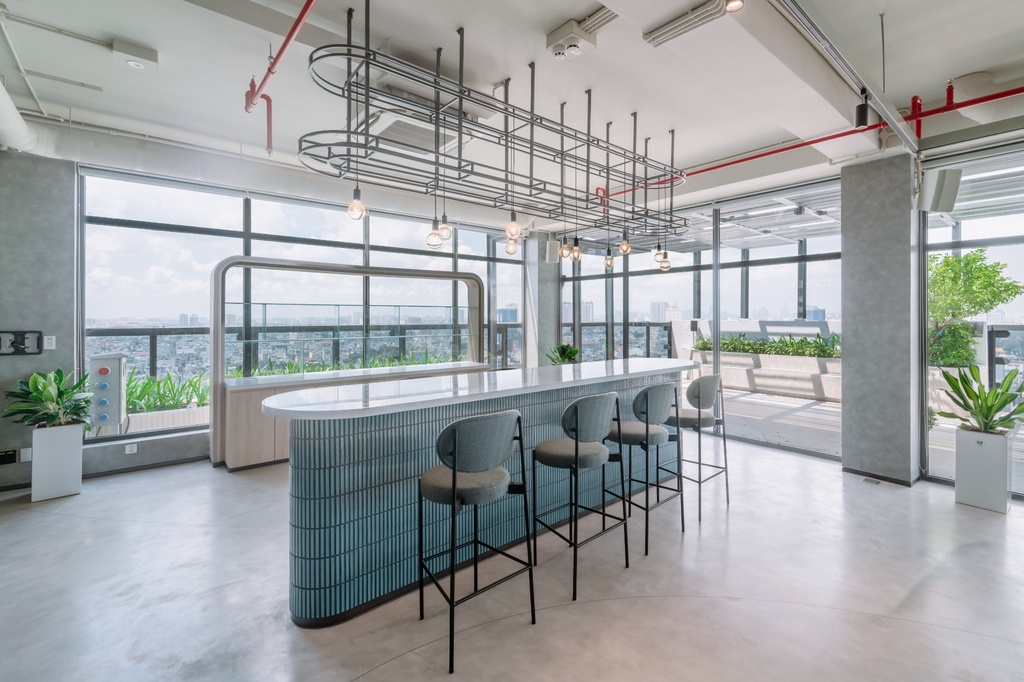
When combined with daylight simulations and intelligent lighting controls, AI can help evaluate lighting configurations that maximize natural light while maintaining visual comfort and managing heat gain.
Indoor Environmental Quality
AI-supported monitoring can help interpret data on indoor air quality, temperature and humidity, allowing building operators to identify environmental conditions that may affect occupant comfort and well-being.
These applications demonstrate how AI in office design and building operations can contribute to sustainability beyond the initial design stage, extending into the everyday performance of a workplace.
However, their effectiveness depends on appropriate sensors, reliable data and properly configured building management systems.
3. Making Better Use of Workplace Spaces
An office can consume substantial resources even when parts of its space remain underutilized.
Meeting rooms that are rarely occupied, oversized collaboration areas and inefficient workstation arrangements can contribute to unnecessary energy consumption and resource use.
Using AI in office design offers opportunities to better understand how people interact with their environments.
By analyzing occupancy patterns and space utilization data, businesses can identify underused areas, understand changing workspace requirements and make more informed decisions about office layouts.
These insights can support:
- Space optimization: Aligning workplace capacity with actual occupancy and business requirements.
- Flexible workplace planning: Creating adaptable environments that accommodate different working styles and activities.
- Resource efficiency: Reducing unnecessary furniture, equipment and spatial requirements.
- Better workplace experiences: Balancing collaborative spaces, focus areas and shared facilities.
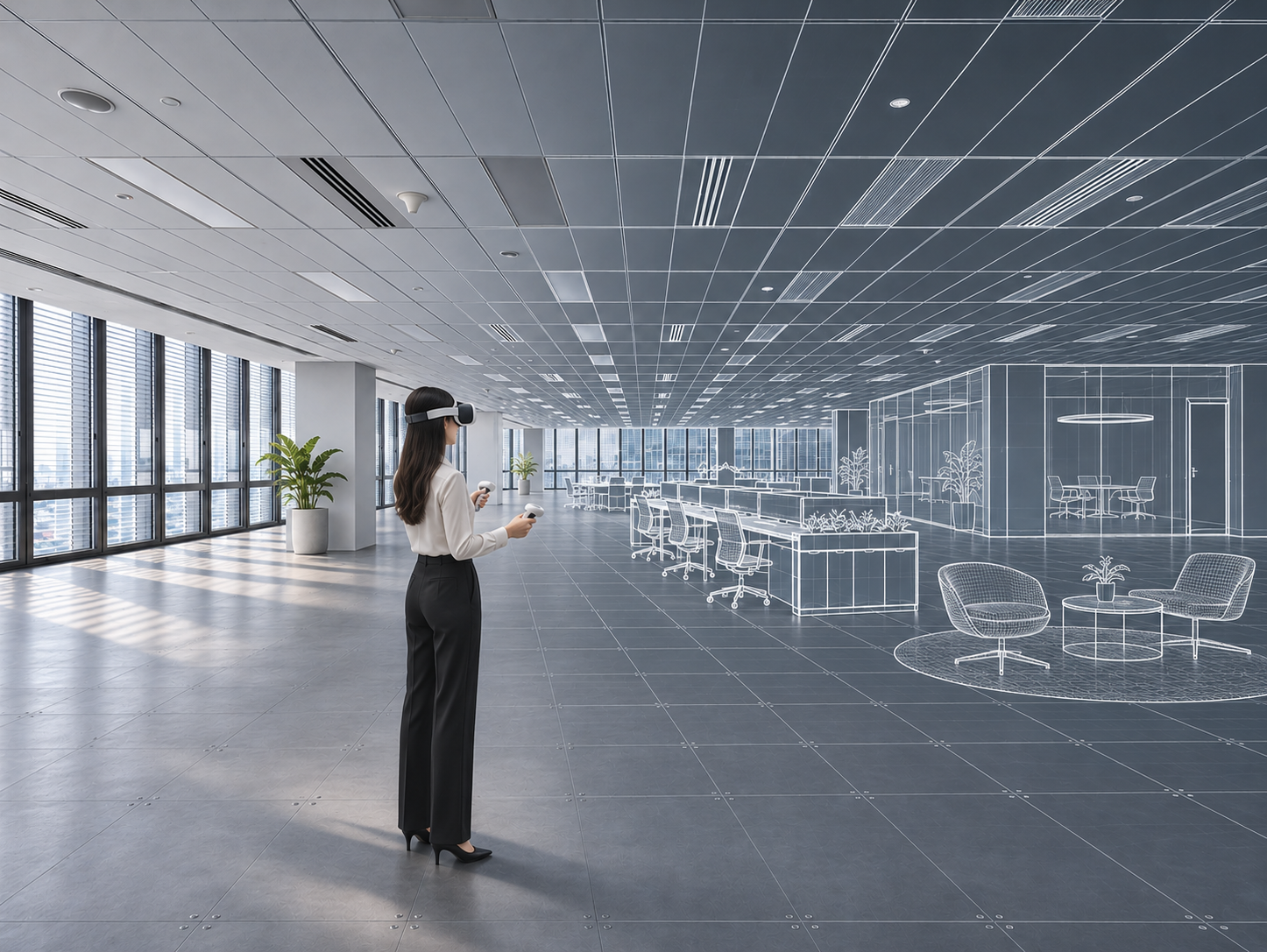
The objective is not simply to increase office density, but to make every square metre more purposeful.
When applied thoughtfully, AI in office design can help businesses understand how their spaces are used and identify opportunities to improve resource efficiency while creating environments that respond more effectively to the people who use them.
4. Making More Informed Material Choices
Material selection is another important aspect of sustainable office design. Flooring, wall finishes, furniture, lighting fixtures and acoustic solutions all contribute to the environmental footprint of an interior fit-out.
Their impact extends beyond manufacturing to include transportation, installation, maintenance, durability and eventual disposal.
AI in office design can support more informed material decisions by helping designers organize product information, compare alternatives and explore different design combinations.
When connected to reliable environmental data, such as Environmental Product Declarations (EPDs), AI-assisted tools can help assess factors including:
- Embodied carbon: Understanding emissions associated with material production and construction.
- Recycled and renewable content: Identifying products incorporating recycled materials or responsibly sourced renewable resources.
- Durability and maintenance: Considering product lifespan, maintenance requirements and replacement frequency.
- Reusability and recyclability: Evaluating opportunities to reuse, refurbish or recycle materials at the end of their service life.
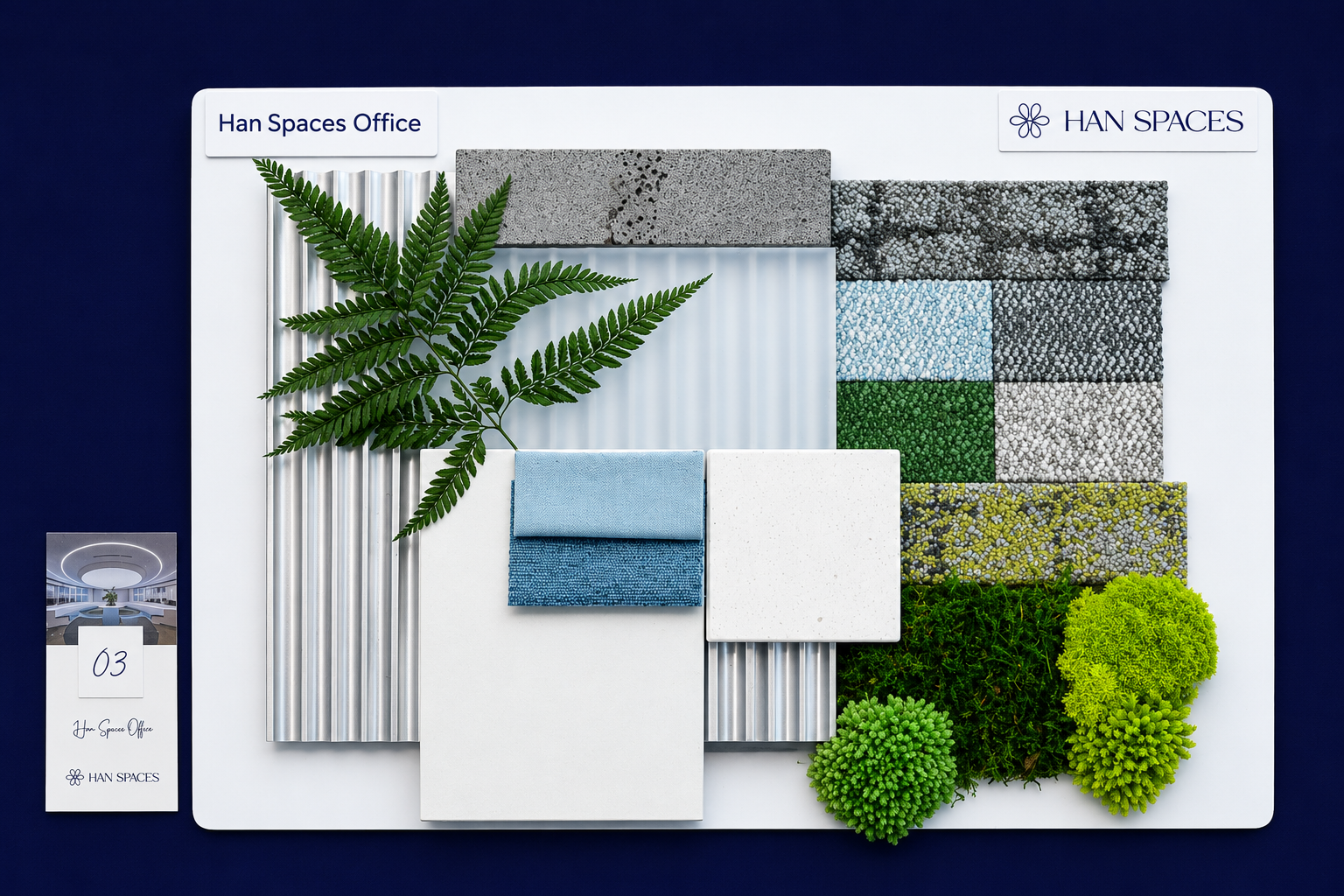
AI-assisted visualization also allows designers to experiment with different textures, finishes and material combinations before implementation.
This can make the selection process more considered, helping teams balance aesthetics, functionality, durability and environmental responsibility.
Ultimately, sustainable material selection is not simply about choosing products labelled as environmentally friendly. It requires understanding how materials perform throughout their lifecycle and how they contribute to the long-term value of a workplace.
5. AI-Powered Design Exploration: The Han Spaces Approach
At Han Spaces, AI-assisted design opens up new possibilities for how workplace concepts are explored, visualized and communicated.
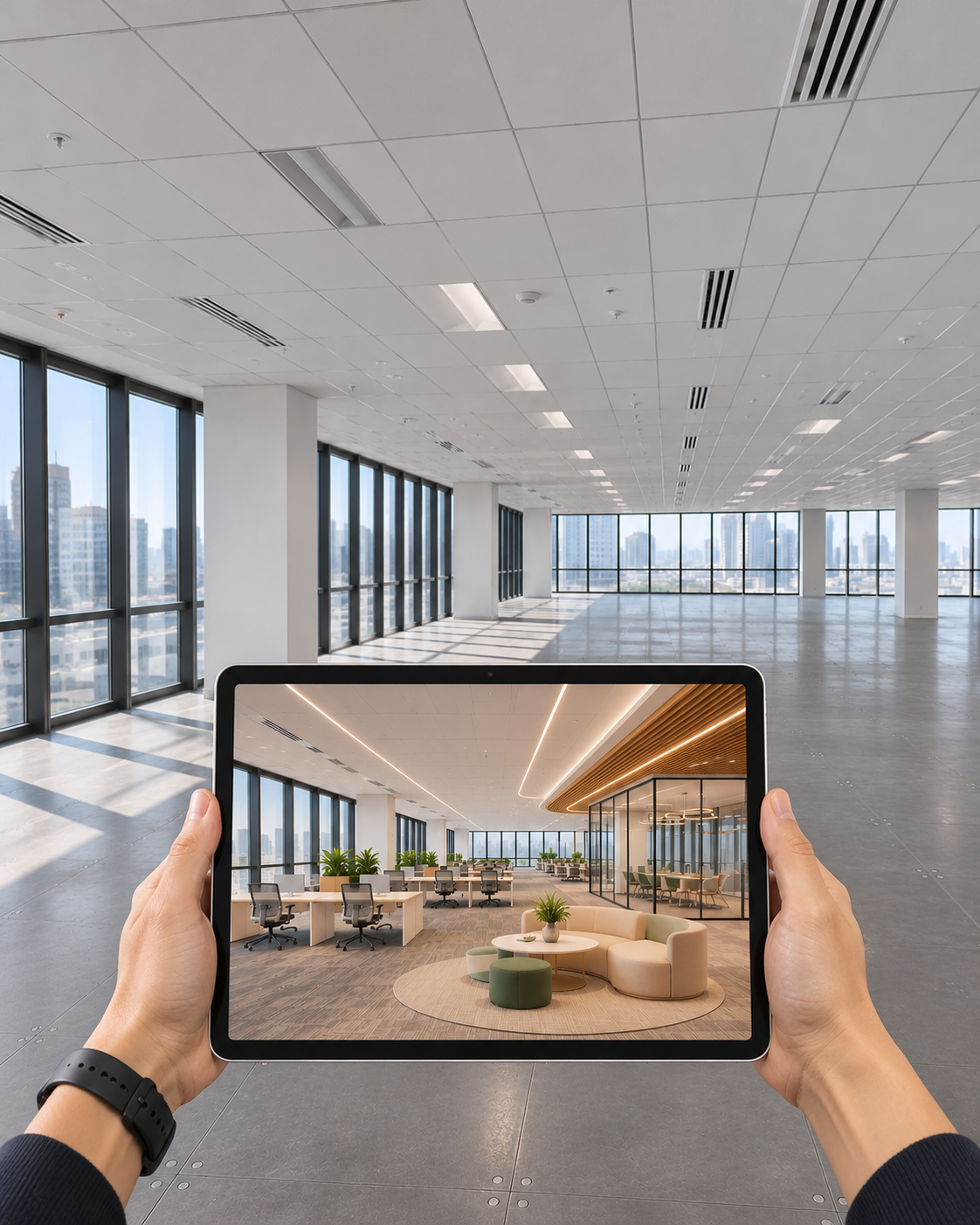
Through AI-powered visualization and interactive design exploration, designers and clients can experiment with different spatial configurations, material combinations, textures and finishes. These tools help translate design ideas into more tangible visual experiences, allowing stakeholders to better understand and evaluate proposed workplace environments.
This approach reflects one of the practical applications of AI in office design: making the design process more interactive while giving clients greater opportunities to explore alternatives before committing to a final direction.
It also creates opportunities to consider sustainability alongside aesthetics and functionality.
For example, alternative material finishes can be visualized within the same design concept, while different spatial arrangements can be explored to better understand their practical implications. When supported by verified product specifications and environmental information, these comparisons can contribute to more informed design decisions.
The value of AI lies not simply in generating visual concepts, but in helping designers and clients explore possibilities before implementation.
By bringing together technology, creative expertise and thoughtful workplace planning, Han Spaces aims to make the design process more interactive and responsive to evolving workplace needs.
AI does not independently guarantee lower environmental impact. Its contribution depends on how the technology is applied, the quality of the information available and the decisions made throughout the design and construction process.
6. Connecting AI in Office Design with Long-Term Sustainability
The future of sustainable office design will depend on more than individual technological solutions. It will require a connected approach that considers environmental performance, resource efficiency, workplace adaptability and the evolving needs of the people who use these spaces.
AI offers opportunities to support this transition by helping designers explore more alternatives, evaluate available information and make better-informed decisions throughout the design process.
However, technology alone cannot guarantee sustainability. Its value ultimately depends on the quality of the data, the expertise behind its application and the principles guiding each design decision.
The most meaningful progress will come from integrating intelligent technology with responsible material choices, efficient spatial planning and human-centred design.
As workplaces continue to evolve, AI in office design can become a valuable tool in creating environments that are more adaptable, resource-conscious and responsive to both business and environmental needs.
Because the environmental impact of a workplace is shaped not only by how it operates, but also by the decisions made long before it is built.
Explore Thoughtful Workplace Design with Han Spaces
Discover how Han Spaces integrates AI in office design, design innovation, technology and workplace wellness to shape more meaningful work environments.
Other News - Events
Beyond Design: How Han Spaces Delivers Quality Office...
HAN Spaces Showcases Workplace Solutions at GBA Business...
Workplace Wellness: How Better Spaces Support People and...
HAN Spaces Joined GBA Workshop on Designing the...